47% greater weight loss than semaglutide. Not in theory — in a direct, randomized, head-to-head Phase 3 clinical trial. That’s what Tirzepatide delivered in the landmark SURMOUNT-5 trial (New England Journal of Medicine, 2025), with participants losing an average of 20.2% of their body weight at 72 weeks versus just 13.7% with semaglutide. Nearly two-thirds of participants on the highest dose lost 20% or more of their total body weight. The numbers don’t lie.
A researcher once described switching her lab’s GLP-1 protocol to Tirzepatide peptide as “like upgrading from a single-engine prop plane to a twin.” That extra engine is the GIP receptor — the pathway semaglutide doesn’t touch. If your metabolic research still runs on single-agonist compounds, you’re leaving real, measurable data on the table.
Buy Tirzepatide for sale at Swiss Chems Official — ≥99% HPLC-verified purity, third-party COA included with every order, lyophilized powder ready for your lab. Available in 5mg, 10mg, 20mg, 30mg, and 40mg vials. Fast shipping to the USA, Canada, Germany, France, Australia, and most international destinations.
What Is Tirzepatide?
Tirzepatide (LY3298176) is a first-in-class synthetic peptide that activates two key metabolic hormone receptors at once — the GIP (glucose-dependent insulinotropic polypeptide) receptor and the GLP-1 (glucagon-like peptide-1) receptor. It was developed by Eli Lilly and gained FDA approval in May 2022 for type 2 diabetes (Mounjaro®), followed by FDA approval for chronic weight management in November 2023 (Zepbound®). The FDA itself classifies it as a first-in-class medication — nothing else approved works quite like it.
Unlike semaglutide, which hits only the GLP-1 receptor, Tirzepatide peptide fires both GIP and GLP-1 simultaneously. The GIP arm adds metabolic dimensions that GLP-1 agonism alone can’t access — improved lipid metabolism in adipose tissue, enhanced beta-cell function, and energy expenditure effects that go beyond appetite suppression. In preclinical models, combining GIP and GLP-1 activation produced greater weight reduction than either receptor in isolation (Jastreboff et al., NEJM, 2022). That synergy is exactly what makes Tirzepatide so valuable for metabolic research.
Structurally, Tirzepatide carries a C20 fatty diacid moiety that binds tightly to plasma albumin (~99%), extending its half-life to approximately 5 days — enabling once-weekly subcutaneous dosing in clinical study models (NCBI StatPearls, 2024).
How Each Receptor Works
GIP Receptor Activation Stimulates insulin secretion in a glucose-dependent manner, enhances beta-cell function, promotes lipid metabolism in adipose tissue, and regulates energy expenditure in both brain and peripheral tissue. This is the pathway semaglutide completely misses.
GLP-1 Receptor Activation Suppresses appetite through central nervous system pathways, reduces inappropriate glucagon secretion, slows gastric emptying, and improves insulin sensitivity. The shared foundation — but amplified by the GIP arm.
The Combined Effect Both receptors firing together creates a metabolic cascade that outpaces either alone. The odds ratio for achieving ≥5% weight loss with Tirzepatide was 21.14 — compared to just 2.24 for semaglutide — in a published meta-analysis of 3,901 patients (PMC, 2024). That’s not a marginal edge. That’s a different category of outcome entirely.
“Obesity is a chronic disease that often does not receive the same standard of care as other conditions, despite its serious impact on physical, psychological and metabolic health.” — Dr. Louis J. Aronne, MD, Principal Investigator, SURMOUNT-1, Weill Cornell Medicine
Tirzepatide Clinical Trial Results — The Data
This is where Tirzepatide peptide earns its reputation. Every number below comes directly from published, peer-reviewed trials.
Key Trial Results at a Glance
Trial
Dose
Key Result
Duration
SURMOUNT-1 (NEJM, 2022)
15mg
22.5% average body weight loss — ~52 lbs
72 weeks
SURMOUNT-1 (NEJM, 2022)
15mg
63% of participants lost ≥20% body weight
72 weeks
SURMOUNT-1 (NEJM, 2022)
10mg
55% of participants lost ≥20% body weight
72 weeks
SURMOUNT-5 (NEJM, 2025)
MTD 10–15mg
20.2% weight loss vs. 13.7% with semaglutide
72 weeks
SURMOUNT-5 (2025)
MTD
47% greater relative weight loss vs. semaglutide
72 weeks
SURMOUNT-4 (JAMA, 2024)
MTD
25.8% weight loss — 36-week lead-in + 52 weeks ongoing
88 weeks
3-Year SURMOUNT-1 (NEJM, 2024)
15mg
19.7% body weight reduction sustained at 176 weeks
176 weeks
3-Year SURMOUNT-1 (NEJM, 2024)
All doses
T2D progression: 1.3% vs. 13.3% placebo — 93% risk reduction
176 weeks
Meta-Analysis (PMC, 2024)
Various
OR for ≥5% weight loss = 21.14 vs. 2.24 for semaglutide
Cardiovascular markers: SURMOUNT-5 showed Tirzepatide reduced waist circumference by 7.2 inches vs. 5.1 inches for semaglutide. Blood pressure, lipids, and inflammatory markers improved consistently across SURMOUNT trials.
Diabetes prevention: The 3-year SURMOUNT-1 extension (NEJM, November 2024) found only 1.3% of Tirzepatide participants developed T2D versus 13.3% in the placebo group — a hazard ratio of 0.07. Even 17 weeks after stopping treatment, only 2.4% of the Tirzepatide group had developed diabetes vs. 13.7% with placebo.
Liver health: Phase 2 SYNERGY-NASH trial data shows Tirzepatide significantly reduced liver fat and improved metabolic markers in NAFLD/NASH patients — a growing research frontier.
Prescriptions: In 2023, Tirzepatide (as Mounjaro) became the 110th most prescribed medication in the USA with over 6 million prescriptions — a number that has grown every quarter since (Wikipedia, Tirzepatide, 2024).
Tirzepatide for Sale | Available Variants
Every vial ships as lyophilized (freeze-dried) powder — the gold standard for peptide stability during transport and storage. All vials are ≥99% HPLC-verified with a COA included.
Vial Size
Purity
Form
Best For
Tirzepatide 5mg
≥99% HPLC
Lyophilized Powder
Pilot assays, receptor binding, initial dose-response experiments
Storage rule: Lyophilized Tirzepatide stores at −20°C for up to 24 months. Once reconstituted, refrigerate at 2–8°C and use within 28 days. Never refreeze a reconstituted solution — freeze-thaw cycles destroy peptide structure and will compromise your results.
Bacteriostatic water (preferred) or sterile 0.9% NaCl
Intended Use
In vitro laboratory research only
Tirzepatide vs. Semaglutide — Side-by-Side
Parameter
Tirzepatide
Semaglutide
Receptors targeted
GIP + GLP-1 (dual)
GLP-1 only
72-week weight loss (SURMOUNT-5)
−20.2%
−13.7%
Relative weight loss advantage
47% greater
Baseline
Waist circumference reduction
−7.2 inches
−5.1 inches
OR for ≥5% weight loss
21.14
2.24
T2D prevention (3-year)
93% relative risk reduction
Not studied head-to-head
Half-life
~5 days
~7 days
GIP receptor activation
✅ Yes
❌ No
FDA-approved indications
T2D (Mounjaro), Obesity + OSA (Zepbound)
T2D (Ozempic), Obesity (Wegovy)
The dual-receptor mechanism is the scientific differentiator. GIP activation adds a metabolic dimension GLP-1 agonism alone simply cannot access — particularly in energy expenditure and adipose tissue signaling. For any research protocol involving insulin sensitivity, adipose modulation, or energy homeostasis, Tirzepatide gives you broader mechanistic coverage.
Tirzepatide Regulatory Timeline
Date
Milestone
2016
Eli Lilly files first patent for Tirzepatide
May 2022
FDA approves Tirzepatide (Mounjaro) for type 2 diabetes — first-in-class
September 2022
EU approval — Mounjaro
November 2022
Health Canada approval
December 2022
TGA Australia approval
November 2023
FDA approves Tirzepatide (Zepbound) for chronic weight management
December 2024
FDA expands Zepbound to include obstructive sleep apnea treatment
2025
SURMOUNT-5 head-to-head confirms 47% greater weight loss vs. semaglutide (NEJM)
Preferred solvent — benzyl alcohol preservative allows multi-dose use
Sterile 1mL insulin syringe
Precise volume measurement
Alcohol swabs (70% IPA)
Stopper disinfection
Clean nitrile gloves
Sterility and contamination prevention
Permanent marker / label
Date, concentration, lot number tracking
Concentration Reference Table
Vial Size
BAC Water Added
Final Concentration
5mg
1mL
5mg/mL
10mg
2mL
5mg/mL
20mg
2mL
10mg/mL
30mg
3mL
10mg/mL
40mg
4mL
10mg/mL
Step 1 — Warm to Room Temperature
Take both vials out of the freezer or fridge 10–15 minutes before starting. Cold-to-cold reconstitution affects dissolution and can alter peptide behavior. Let them reach room temp first.
Step 2 — Disinfect Both Stoppers
Wipe the rubber stopper of both vials firmly with a 70% IPA alcohol swab. Let air dry for 30 seconds. Skipping this step is how contamination happens — and contamination ruins your entire batch.
Step 3 — Draw BAC Water
Pull your target BAC water volume into the sterile syringe. Use the concentration table above for reference. Double-check your math before inserting the needle.
Step 4 — Inject Slowly Along the Vial Wall
Insert the needle through the stopper, tilt the vial at 45°, and inject water slowly down the inner glass wall — not directly onto the powder. This prevents foaming and shear stress on the peptide structure. Take your time here.
Step 5 — Swirl Gently — Never Shake
Roll the vial gently between your palms. Slow circular swirling motion for 3–5 minutes. Shaking introduces bubbles and mechanical stress that can denature Tirzepatide. The final solution should be clear and colorless to very slightly yellow with zero visible particles.
Step 6 — Inspect Before Use
If the solution is cloudy, discolored beyond pale yellow, or has visible particles after full swirling time — discard. Don’t risk your protocol or your data on a compromised vial.
Step 7 — Label and Refrigerate
Label immediately: date reconstituted, concentration, lot number, your initials. Refrigerate at 2–8°C. Use within 28 days. Document every use. Never refreeze.
No. Ozempic (semaglutide) targets one receptor — GLP-1 only. Tirzepatide targets two — GIP and GLP-1. In the head-to-head SURMOUNT-5 trial (NEJM, 2025), Tirzepatide produced 47% greater weight loss than semaglutide at 72 weeks. Same drug class, very different molecules and outcomes.
2. What are the main benefits of Tirzepatide for type 2 diabetes research?
In the SURPASS program, Tirzepatide at 5mg, 10mg, and 15mg doses showed greater HbA1c reduction and weight loss than both semaglutide 1mg and dulaglutide 1.5mg. The 3-year SURMOUNT-1 extension (NEJM, 2024) found only 1.3% of Tirzepatide participants developed T2D versus 13.3% placebo — a 93% relative risk reduction. Broad glycemic, weight, and cardiovascular research coverage in one compound.
3. What are the drawbacks of Tirzepatide?
The most common issues in clinical trials were gastrointestinal — nausea, diarrhea, vomiting, constipation — mostly mild and occurring during dose escalation (SURMOUNT-1, NEJM, 2022). Treatment discontinuation due to side effects was 4.3%–7.1% across doses. There’s also a black-box warning for thyroid C-cell tumors from rodent studies — clinical significance in humans remains under investigation (MedlinePlus, 2026). Weight regain after stopping is documented — over half of lost weight typically returns within a year of discontinuation
4. Who cannot take Tirzepatide?
Tirzepatide is contraindicated in people with a personal or family history of medullary thyroid cancer, Multiple Endocrine Neoplasia syndrome type 2 (MEN 2), known hypersensitivity to the compound, and type 1 diabetes. It has not been studied in patients with active pancreatitis and is not approved for use under age 18
5. Does Tirzepatide burn fat or just suppress appetite?
Both — and that’s the research value. Tirzepatide reduces caloric intake through GLP-1-mediated appetite suppression AND influences energy expenditure and fat metabolism through GIP receptor activation in adipose tissue. Preclinical data confirmed GIP agonism increases energy expenditure in animal models. It’s not just a hunger suppressant — it shifts the entire energy balance equation.
6. What are the most common side effects?
Nausea, diarrhea, vomiting, constipation, abdominal pain, decreased appetite, and fatigue — occurring in ≥5% of participants in clinical trials, mostly mild-to-moderate and peaking during dose escalation. A real-world FAERS database analysis covering 2022–2025 (65,974 reports) found no new safety signals beyond what clinical trials identified
7. How long does it take to lose 20 pounds on Tirzepatide?
In SURMOUNT-1, early responders achieving ≥5% weight loss by Week 12 went on to show significantly greater reductions at Weeks 24 and 72. For a participant starting at ~231 lbs (the trial mean), losing 20 lbs represents roughly 8.7% body weight — achievable for most responders within 12–20 weeks at therapeutic doses. A 2025 post-hoc SURMOUNT-1 analysis (Diabetes, Obesity and Metabolism) confirmed Week 12 response is a strong predictor of long-term outcomes.
8. Which has worse side effects — semaglutide or Tirzepatide?
Their GI side effect profiles are broadly similar since both activate GLP-1 receptors. In SURMOUNT-5, tolerability was comparable at maximum tolerated doses for both. Tirzepatide has an additional, lower-frequency side effect — dysesthesia (unusual sensations) — linked to GIP receptor activity. The FAERS real-world analysis (2022–2025, 65,974 reports) confirmed no unexpected signals beyond clinical trial findings for either compound
9. What drugs interact with Tirzepatide?
Key interactions to note: insulin (additive hypoglycemia risk), sulfonylureas (similar hypoglycemia potentiation), oral contraceptives (delayed gastric emptying may reduce absorption — backup contraception recommended during initiation), and narrow therapeutic index drugs like warfarin or levothyroxine (altered GI transit affects absorption kinetics). Always control for these in research protocol design
10. Can you switch from Ozempic to Tirzepatide?
Yes — and in clinical settings, patients who switched from semaglutide to Tirzepatide showed additional weight loss and glycemic improvement, suggesting the GIP component adds meaningful benefit beyond what GLP-1 agonism already achieved. In a research context, allow adequate washout (~35 days, approximately 5 half-lives of semaglutide) before introducing Tirzepatide to avoid confounding dual-receptor effects on your model.
11. What does Tirzepatide do to your organs?
Published research shows meaningful effects across multiple systems: pancreas — enhances insulin secretion, suppresses glucagon; liver — reduces hepatic glucose production and liver fat in NAFLD/NASH models (SYNERGY-NASH trial); adipose tissue — GIP activation promotes lipid mobilization; cardiovascular system — improvements in blood pressure, non-HDL cholesterol, and inflammatory markers across SURMOUNT trials (Tandfonline, 2024). The SURMOUNT-MMO cardiovascular outcomes trial (15,000+ participants) is expected to complete in 2027 and will provide the most comprehensive long-term organ-level safety data to date.
12. What are the popular brand names for Tirzepatide?
Tirzepatide is sold as Mounjaro® for type 2 diabetes management and Zepbound® for chronic weight management and obstructive sleep apnea — both developed and marketed by Eli Lilly. As a research peptide, it is available in lyophilized powder form from verified suppliers for laboratory use only, distinct from the pre-filled clinical injection pens.
⚠️ Research Use Only: All Tirzepatide peptide products are intended strictly for in vitro laboratory research by qualified professionals. Not for human or animal use. Not evaluated or approved by the FDA, EMA, or Health Canada for therapeutic use. Buyers confirm compliance with all applicable local regulations.
Vials
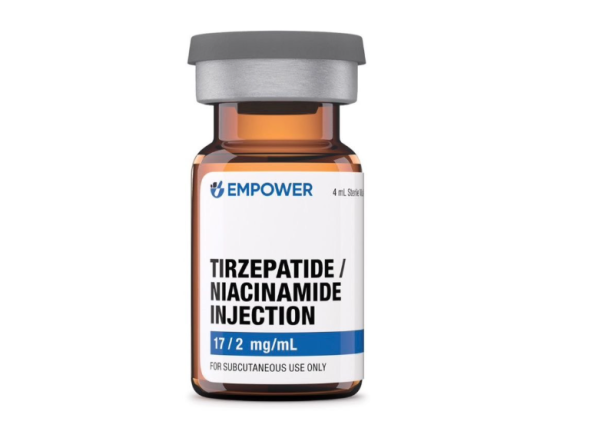
17/2 mg/mL, 8/2 mg/mL
3 reviews for Tirzepatide
Rated 5 out of 5
Camden (verified owner)–
SwissChems Official delivers quickly and makes the whole experience easy and stress-free.
Rated 5 out of 5
Owen (verified owner)–
Good quality overall.
Rated 5 out of 5
Kevin (verified owner)–
SwissChems Official lives up to its reputation with fast delivery and quality products.

Camden (verified owner) –
SwissChems Official delivers quickly and makes the whole experience easy and stress-free.
Owen (verified owner) –
Good quality overall.
Kevin (verified owner) –
SwissChems Official lives up to its reputation with fast delivery and quality products.