$439.99Original price was: $439.99.$369.99Current price is: $369.99.
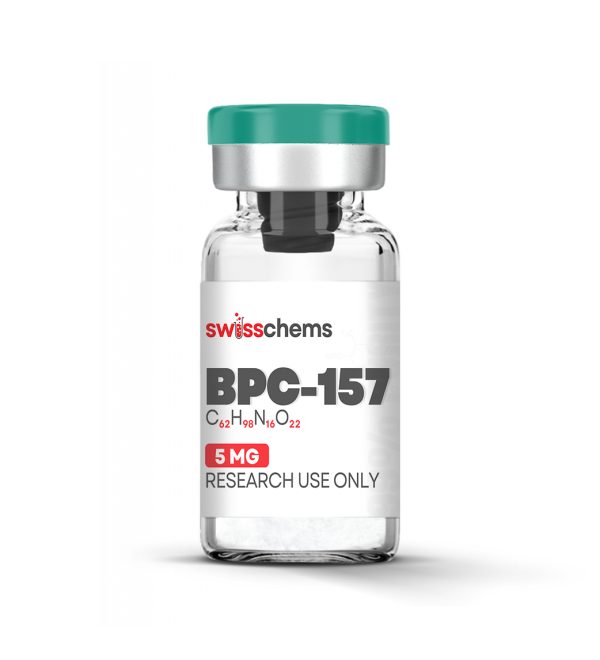
BPC-157 for sale, 5mg per vial, 10-vial kit, 50mg total. ≥99% HPLC-verified purity, COA included, 36-month shelf life. Powerful 15-amino acid gastric peptide for wound healing, tendon, GI, vascular, and tissue repair research. Ships globally.
You are from United States (US), price will be in United States (US) dollar ($).
BPC-157 5mg Kit (10 Vials) 50mg For Sale | Body Protection Compound Peptide | Research Grade
Your body already makes it. Deep in the gastric juice lining your stomach sits a naturally occurring protein complex and buried inside it is a 15-amino acid sequence that researchers have spent decades trying to fully understand. That sequence is BPC-157. Body Protection Compound 157. And the more labs study it, the more applications keep surfacing, wound healing, tendon repair, gastrointestinal protection, vascular growth, nerve tissue, even cardiovascular and neurological models. It’s one of the most broadly studied research peptides in the world for a reason.
BPC-157 for sale here, 5mg per vial, 10-vial kit, 50mg total, ≥99% purity, COA included, 36-month shelf life. Ships globally.
What Is BPC-157?
BPC-157 (Body Protection Compound-157, also known as PL 14736) is a synthetic pentadecapeptide — 15 amino acids — derived from a naturally occurring fragment of the Body Protection Compound protein found in human gastric juice. Its amino acid sequence is Gly-Glu-Pro-Pro-Pro-Gly-Lys-Pro-Ala-Asp-Asp-Ala-Gly-Leu-Val. Molecular formula C62H98N16O22, molar mass 1419.5 g/mol (CAS: 137525-51-0, PubChem: 9941957).
What makes BPC-157 stand out from most research peptides is its remarkable stability. That proline-rich sequence gives it unusual conformational rigidity that resists proteolytic degradation — including in acidic gastric environments. Studies confirm it remains stable for over 24 hours in acid conditions without protective carriers. That acid-stability matters enormously for researchers studying oral administration routes versus injectable protocols, because most peptides disintegrate before reaching systemic circulation when taken orally. BPC-157 doesn’t.
Its mechanism touches multiple interconnected pathways simultaneously. It modulates nitric oxide (NO) signaling, a master regulator of blood vessel dilation, cellular protection, and inflammation. It interacts with growth hormone receptors, potentially stimulating cell proliferation and collagen network formation. It promotes VEGF (vascular endothelial growth factor) expression, driving angiogenesis — the growth of new blood vessels toward sites of damage. And it recruits fibroblasts to injury sites, accelerating extracellular matrix protein production including collagen, reticulin, and elastin. That combination of angiogenic, cytoprotective, anti-inflammatory, and tissue-remodeling activity in a single stable peptide is precisely what makes BPC-157 so valuable across such a wide range of research models.
The Five Key Mechanisms of BPC-157
Nitric Oxide Pathway ModulationBPC-157 activates VEGFR2 — a cell surface receptor central to nitric oxide signaling — which supports vascular dilation, blood flow regulation, and endothelial cell proliferation. This NO-dependent mechanism underpins much of its observed cytoprotective and angiogenic activity across tissue types.
Angiogenesis — New Blood Vessel Formation One of its most documented properties. BPC-157 stimulates collateral blood vessel growth, promotes VEGF-A expression, and accelerates vascular tube formation in cell culture models. Research in rat ischemia models observed substantial increases in collateral blood vessel growth rates — primarily in GI tissue but with similar observations in muscle, neurological, and cardiovascular tissue.
Fibroblast Recruitment and ECM Production Fibroblasts produce the structural proteins that rebuild tissue — collagen, elastin, fibrin. BPC-157 actively recruits fibroblasts to injury sites, increases their migration speed, and promotes outgrowth from tendon explants. Research in rodent wound models documented higher collagen, reticulin, and blood vessel density in BPC-157-treated groups versus controls.
Growth Hormone Receptor InteractionBPC-157 appears to interact with growth hormone receptors, potentially stimulating cell proliferation pathways that lead to new tissue formation. This GH receptor interaction connects it to broader regenerative biology beyond just local wound repair.
Gastrointestinal Mucosal Protection The stomach is where BPC-157 naturally originates — and GI protection is where some of its most consistent research outcomes appear. It preserves mucosal barrier integrity, counteracts serotonin-induced gastric disruption via 5-HT2A receptor modulation, and shows protective effects in gastric ulcer and inflammatory bowel research models.
What Researchers Use BPC-157 For
Wound Healing and Tissue Repair The broadest and most documented application. In a key rodent study using three wound models — skin wounds, colon anastomosis, and synthetic sponge implantation — BPC-157-treated models showed significantly higher collagen, reticulin, and blood vessel density on histological analysis versus controls. Researchers studying wound healing, incision repair, and regenerative tissue biology consistently reach for BPC-157 as a primary model compound.
Tendon, Ligament, and Musculoskeletal Research Tendon and ligament injuries heal slowly because of poor blood supply — fibroblast migration is sluggish, and repair is easily obstructed. BPC-157 addresses this directly by improving collateralization and fibroblast density at injury sites. Research in rat tendon models hypothesized accelerated tendon fibroblast outgrowth and increased cellular survival under oxidative stress conditions. Labs studying sports injury models, connective tissue repair, and musculoskeletal recovery routinely use this kit.
Gastrointestinal Research From gastric ulcers to inflammatory bowel disease to mucosal barrier integrity — BPC-157 has one of the deepest research track records in GI biology. Its gastric origin gives it natural relevance to GI tissue models, and its oral stability makes it particularly useful for studying oral administration routes in GI-focused protocols.
Vascular and Cardiovascular Research The VEGFR2-mediated angiogenic activity makes BPC-157 relevant for cardiovascular research — studying collateral vessel formation, endothelial cell behaviour, microvascular perfusion, and ischemia recovery models. Research has observed similar angiogenic effects across GI, muscle, and cardiovascular tissue types.
Neurological ResearchBPC-157 shows activity in neurological tissue models — including studies on nerve repair, neuroprotection, and neurotransmitter modulation (particularly serotonin and dopamine pathways). Its interaction with 5-HT2A receptors has made it a tool for researchers studying mood-related and neurological signaling alongside tissue repair endpoints.
Pain and Analgesic Research Preclinical models have documented possible analgesic characteristics — with BPC-157 studied in pain perception pathways including its relationship with nitric oxide signaling and inflammatory cytokine modulation.
Let your BPC-157 vial sit at room temperature for 10–15 minutes before opening. Never reconstitute cold — it affects dissolution rate and risks damaging the peptide structure.
Step 2 — Disinfect
Wipe the rubber stopper with a 70% IPA swab. Air dry 30 seconds. Every single time — including repeat-dose draws from the same vial.
Step 3 — Inject BAC Water Slowly Along the Vial Wall
Draw your target BAC water volume. Tilt the vial at 45° and inject slowly down the inner glass wall — not directly onto the powder. This prevents foaming and mechanical stress on the peptide.
Step 4 — Swirl Gently, Never Shake
Roll the vial slowly between your palms in gentle circles for 2–3 minutes. BPC-157 dissolves readily — the solution should become clear quickly. Never shake. Shaking introduces bubbles and mechanical shear that degrades the peptide.
Step 5 — Inspect
Clear to very slightly pale solution — good. Cloudy or particulate after full swirling time — discard. Never use a compromised vial.
Step 6 — Label and Refrigerate
Write the date, concentration, and lot number immediately. Refrigerate at 2–8°C. Use within 28 days. Protect from light between uses.
How to Store BPC-157
Condition
Temperature
Duration
Notes
Lyophilized — short term
Room temperature
Several days to weeks
Original sealed packaging, away from light
Lyophilized — long term
−20°C or colder
Up to 36 months
Sealed, away from light and moisture
Reconstituted
2–8°C refrigerator
Up to 28 days
Label with date; inspect before each use
Reconstituted — frozen
❌ Avoid
N/A
Freeze-thaw cycles damage peptide structure
BPC-157 is notably stable compared to many research peptides — its proline-rich structure resists degradation. But that doesn’t mean storage shortcuts are acceptable. Treat it well and your 36-month lyophilized shelf life holds.
BPC-157 vs. TB-500 | Which Does Your Research Need?
Researchers frequently study BPC-157 and TB-500 (Thymosin Beta-4) together because their mechanisms are complementary rather than overlapping. Here’s the quick distinction:
Many labs run both compounds in parallel or combination protocols — one targeting local GI and wound biology, the other addressing systemic multi-site tissue repair. They don’t compete. They complement.
FAQs About BPC-157 for sale
1. What organs does BPC-157 heal?
In preclinical research models, BPC-157 shows activity across a remarkably wide range of tissues — stomach and GI tract (its origin tissue), muscle, tendon, ligament, bone, liver, kidney, heart, blood vessels, and neurological tissue. Its multi-pathway mechanism — hitting nitric oxide signaling, angiogenesis, fibroblast recruitment, and growth factor pathways simultaneously — is why researchers find it relevant to so many organ systems rather than just one.
2. Does BPC-157 affect the liver?
Research suggests BPC-157 may be protective of liver tissue rather than damaging to it. In preclinical models, it shows cytoprotective activity through nitric oxide pathway modulation and anti-inflammatory effects relevant to hepatic tissue. There is no published evidence of hepatotoxicity from BPC-157 in controlled research settings. It is not associated with the liver damage seen from some other research compounds.
3. Can you take BPC-157 every day?
In preclinical animal research models, BPC-157 has been administered daily without observed toxicity signals across various study durations. No adverse effects have been consistently documented in daily dosing protocols in research literature. As a research-grade compound, usage protocols are entirely dependent on your experimental design and institutional guidelines.
4. Does BPC-157 work immediately?
In preclinical models, effects on vascular growth and cellular signaling begin relatively quickly at the molecular level — but observable tissue-level changes build over time. Research in wound healing models typically measures outcomes at day 4, day 7, and beyond rather than hours. The timeline in any experimental model depends on the endpoint being measured, the tissue type, and the dosing protocol.
5. Are there any negative side effects of BPC-157?
Published preclinical research does not document significant adverse effects from BPC-157 across multiple animal models and dosing protocols. Its gastric origin and natural stability profile make it one of the better-tolerated research peptides in the literature. That said, it is not FDA-approved, no long-term human safety data exists, and it is available strictly for laboratory research use only.
6. Is BPC-157 hard on the liver or kidneys?
No evidence in preclinical literature suggests BPC-157 is nephrotoxic or hepatotoxic. Research in fact points toward cytoprotective effects in organ tissue models through NO pathway and anti-inflammatory mechanisms. It is not structurally similar to compounds known to cause organ stress, and its gastric origin provides some biological context for its systemic tolerance profile in research models.
7. How does BPC-157 affect the heart?
In cardiovascular research models, BPC-157 promotes collateral blood vessel formation through VEGFR2-mediated angiogenesis and nitric oxide signaling. This vascular recruitment activity has been studied in ischemia models across GI, muscle, and cardiovascular tissue. Research on cardiac tissue models suggests potential cytoprotective and vascular remodeling activity — a growing area of interest alongside GI and musculoskeletal applications.
8. Does BPC-157 build muscle?
Muscle repair is one of the documented research applications — but BPC-157 works through repair and recovery pathways rather than direct anabolic mechanisms. It promotes fibroblast migration, extracellular matrix protein production, and vascular support to damaged muscle tissue. In rodent models involving muscle-to-bone reattachment, BPC-157 enabled complete functional recovery versus permanent impairment in untreated controls — a significant finding for musculoskeletal repair research. It is not a muscle-building compound in the anabolic sense.
9. How long does it take to notice results from BPC-157?
In preclinical wound healing models, measurable differences in re-epithelialization and collagen deposition appear within 4–7 days. In tendon and connective tissue models, timeline varies based on injury severity and dosing protocol. For gastrointestinal research models, cytoprotective effects are observed relatively quickly due to direct tissue contact. Timeline is highly protocol and endpoint dependent.
10. When is the best time to use BPC-157 in a research protocol?
In animal research protocols, BPC-157 has been administered both before and after injury induction — and shows activity in both protective and therapeutic models. Some studies begin dosing immediately post-injury. The timing design depends entirely on whether you’re studying prophylactic cytoprotection or active tissue repair signaling — both are documented research designs in the BPC-157 literature.
11. Is BPC-157 a peptide?
Yes. BPC-157 is a 15-amino acid synthetic pentadecapeptide — one of the most stable peptides studied in regenerative research due to its proline-rich backbone. It resists enzymatic degradation including in gastric acid environments, which distinguishes it from most research peptides that break down rapidly in acidic conditions.
12. What peptide does Jennifer Aniston use?
Jennifer Aniston has publicly referenced using peptides in her wellness routine, though she has not specifically confirmed using BPC-157 by name. Various peptides including BPC-157, TB-500, and GLP-1 analogues have been widely discussed in wellness and biohacking communities. This product is sold strictly for qualified laboratory research use only — not for personal wellness use.
⚠️ Research Use Only: BPC-157 is intended strictly for in vitro laboratory research by qualified professionals. Not for human or animal consumption. Not evaluated or approved by the FDA for therapeutic use. Buyers confirm compliance with all applicable local regulations.
Reviews
There are no reviews yet.
Be the first to review “BPC-157 5mg KIT (10 vials), 50mg”Cancel Reply

Reviews
There are no reviews yet.